 Save
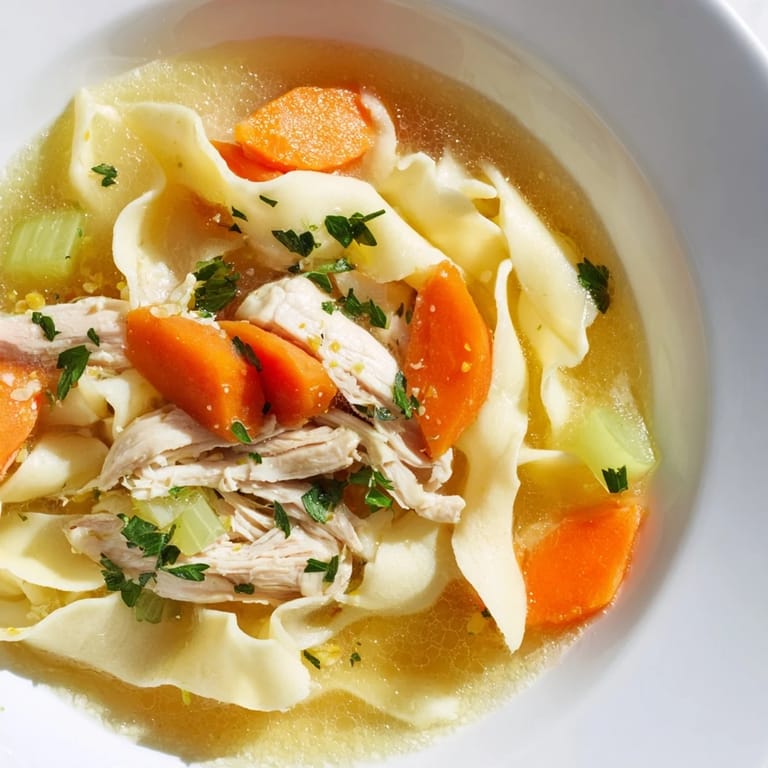
Save There's something about the smell of sautéed onions and celery that instantly transports me to my grandmother's kitchen on a gray winter afternoon. She'd stand at the stove with a wooden spoon in one hand and a cup of coffee in the other, letting the broth simmer while telling me stories about the meals she'd made for her own children. Now when I make chicken noodle soup, I find myself doing exactly the same thing—and it hits different when you realize you've become the person you watched.
I made this soup for my roommate after she'd had the kind of day where everything went wrong, and I watched her shoulders visibly relax with the first spoonful. She didn't say much, just kept eating, and that told me everything. The next week she asked me to teach her how to make it, and now it's become our thing—something we make when life feels too loud.
Ingredients
- Chicken breasts or thighs: Boneless, skinless breasts cook faster and keep things lighter, but thighs add a richer, more forgiving depth—I've learned thighs are harder to dry out, which matters when life gets hectic.
- Carrots and celery: The backbone of flavor; slice them thick enough that they stay distinct in each spoonful, not so thin they disappear.
- Yellow onion: Dice it small so it softens into the broth and becomes part of the soul of the soup.
- Garlic: Mince it fresh; jarred just doesn't have the same warmth.
- Chicken broth: Low-sodium matters here because you're seasoning as you go, and it's easier to add salt than remove it.
- Wide egg noodles: They catch the broth beautifully and have a tender, homey texture that thin noodles miss.
- Bay leaf and thyme: Dried herbs work fine, but they should feel purposeful, not an afterthought.
- Fresh parsley: This is your finishing touch—it brightens everything at the last second.
- Olive oil: Just enough to start the vegetables without making the soup feel heavy.
Tired of Takeout? 🥡
Get 10 meals you can make faster than delivery arrives. Seriously.
One email. No spam. Unsubscribe anytime.
Instructions
- Build Your base:
- Heat the olive oil in a large pot over medium heat, then add your diced onions, sliced carrots, and celery. Listen for that gentle sizzle and watch as the onions turn translucent and the whole kitchen fills with that unmistakable smell of home cooking. Let them soften for 4 to 5 minutes, stirring occasionally so nothing catches on the bottom.
- Wake up the garlic:
- Add your minced garlic and let it cook for just about a minute—you want it fragrant and soft, not brown or bitter. This is the moment where raw kitchen energy becomes something rounded and warm.
- Add the chicken and broth:
- Place your chicken breasts whole into the pot, then pour in the broth along with the bay leaf, thyme, salt, and pepper. Bring it all to a boil, then immediately turn the heat down and let it simmer uncovered for 15 to 20 minutes until the chicken is fully cooked through and no longer pink inside.
- Shred and return:
- Take the chicken out with a slotted spoon and set it on a cutting board to cool just enough to handle. Use two forks to pull it apart into tender, irregular shreds that will distribute throughout the soup rather than clumping together.
- Bring noodles in:
- Return the shredded chicken to the pot and add your egg noodles, stirring gently so they don't stick to the bottom. Simmer for 7 to 8 minutes until the noodles are tender but still have a little bite, and the broth has become silky and slightly thicker from the starch they release.
- Season and finish:
- Stir in the fresh parsley, taste a spoonful, and adjust the salt and pepper until it tastes exactly right to you. Remove the bay leaf, ladle into bowls, and garnish with extra parsley if the mood strikes.
 Save
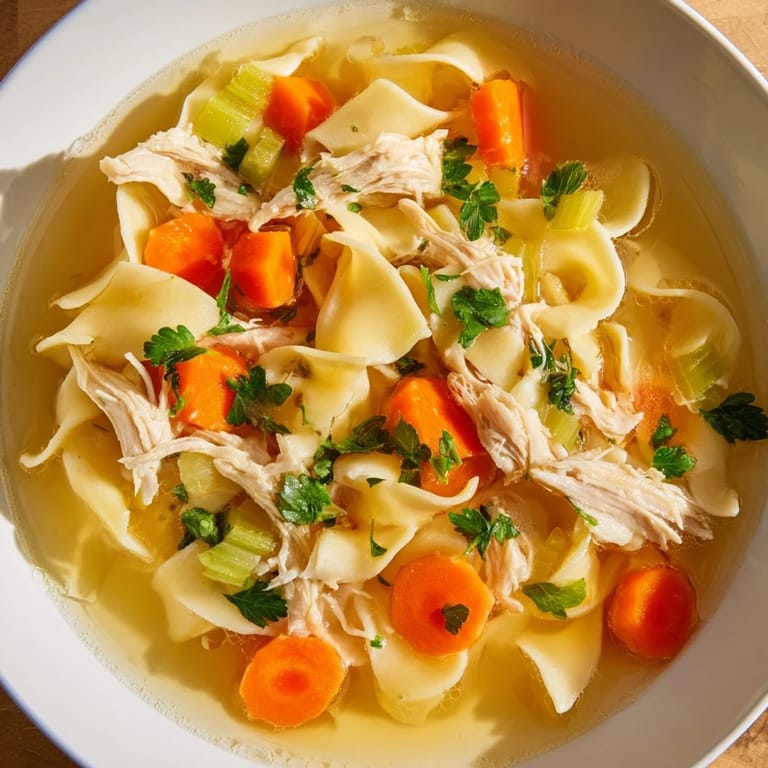
Save There was a night when my kitchen felt too quiet, and I made this soup just to have something warm to hold and taste. By the time I finished eating, the silence didn't feel lonely anymore—it felt like company.
Why This Soup Works Every Time
Chicken noodle soup succeeds because it operates on such honest principles. The vegetables soften into sweetness, the chicken becomes impossibly tender, and the noodles absorb everything around them like tiny flavor sponges. There's no technique that requires a degree, no ingredient that's hard to find—just a sequence of simple choices that somehow add up to something greater than the sum of their parts.
Playing Around With What You Have
This recipe is forgiving in a way that makes it perfect for improvisation. I've made it with rotisserie chicken when I was short on time, swapped the noodles for rice when that's what was in the pantry, and thrown in whatever vegetables were looking lonely in the crisper drawer. The core—the broth, the chicken, the gentle cooking—stays the same, and everything else bends to fit your mood and what you have available.
Soup as a Love Language
There's something about making soup for someone that says things you might not know how to say out loud. It's time-intensive enough to feel like a gesture, but simple enough that the effort disappears into the comfort of the result. I've learned that the best meals aren't the ones that impress people—they're the ones that make them feel seen and cared for.
- Make extra and freeze it in portions so you always have comfort ready when someone needs it.
- Taste it before serving and adjust the seasoning one final time—this small act of attention is everything.
- Serve it in a bowl you actually love, because even comfort deserves to be presented with intention.
 Save
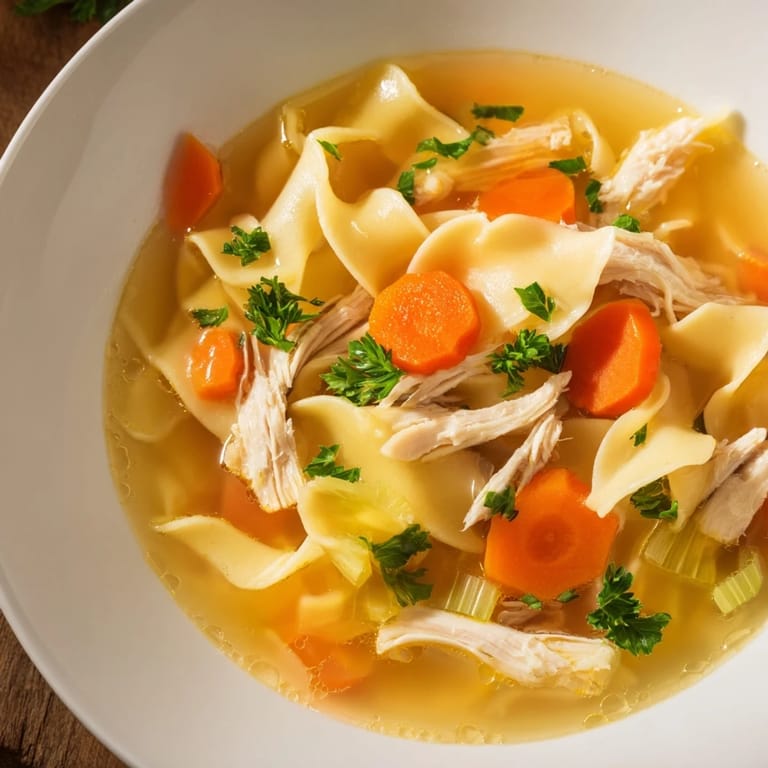
Save Make this soup and let it remind you why the simplest meals are often the most nourishing. It's honest food for honest moments.
Recipe FAQs
- → What type of chicken works best?
Boneless, skinless chicken breasts or thighs both work well. Thighs offer a richer flavor and more moist texture.
- → Can I substitute the egg noodles?
Yes, gluten-free noodles or other pasta varieties can be used depending on dietary needs.
- → How do I enhance the broth’s flavor?
Sautéing onions, carrots, and celery before adding broth and herbs builds a deeper, savory base.
- → When should fresh parsley be added?
Stir fresh parsley in at the end of cooking to maintain its bright, fresh flavor and color.
- → What are some optional vegetable additions?
Peas or corn can be added during the last minutes of simmering to increase vegetable content and sweetness.