 Save
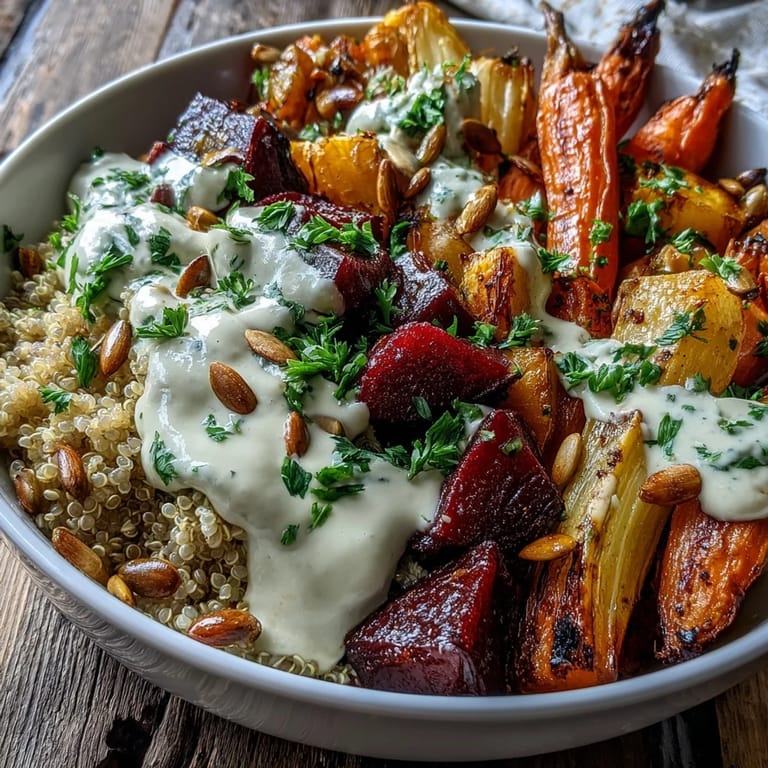
Save There's something about the smell of root vegetables caramelizing in a hot oven that makes you forget it's just lunch you're making. A friend once stopped by my kitchen mid-roast and said the air smelled like autumn decided to visit in July—and she was right. This bowl came together almost by accident one afternoon when I had a pile of vegetables that needed using and suddenly realized they didn't want to be complicated. The creamy tahini drizzle transformed everything from side dish territory into something that actually felt like a meal worth sitting down for.
I made this for my mom during that weird season when she was trying to eat lighter but didn't want to sacrifice flavor, and watching her actually go back for seconds surprised us both. She kept asking about the tahini—whether I'd added something to it—but there's nothing hidden, just good ingredients doing their job. That's when I realized this bowl wasn't trying to be health food masquerading as indulgence; it actually was both things at once.
Ingredients
- Carrots: Two medium ones, peeled and cut into 1-inch pieces—these sweeten as they roast and give you that natural sugar hit.
- Beets: Two medium ones, peeled and cut into 1-inch pieces—they'll stain your fingers a little, but that earthy sweetness is worth it.
- Turnips: Two medium ones, peeled and cut into 1-inch pieces—these get creamy inside while the edges caramelize, a texture surprise people don't expect.
- Parsnips: Two medium ones, peeled and cut into 1-inch pieces—almost buttery when roasted properly, adding depth to the mix.
- Olive oil: Two tablespoons to coat everything evenly—don't skimp here because it's what creates those caramelized edges.
- Sea salt and black pepper: One teaspoon salt and half a teaspoon pepper—the salt draws out moisture so vegetables can actually crisp up.
- Dried thyme or rosemary: One teaspoon optional but worth it—either one adds a whisper of herbaceous flavor that ties everything together.
- Quinoa: One cup rinsed—rinsing matters more than people think, removes bitterness and helps grains stay fluffy.
- Water or vegetable broth: Two cups—broth gives extra flavor if you have it, but water works fine too.
- Salt for quinoa: Half a teaspoon mixed into the cooking liquid.
- Tahini: A third cup of this sesame paste—creamy, nutty, and what makes this bowl feel substantial.
- Lemon juice: Two tablespoons—this cuts through tahini's richness and keeps the sauce bright.
- Water for sauce: Two tablespoons to start, plus more as needed—you're thinning the tahini to a drizzleable consistency.
- Garlic: One clove minced—a single clove is enough to whisper presence without shouting.
- Salt for sauce: Half a teaspoon to balance flavors.
- Maple syrup or honey: One teaspoon optional—adds a touch of sweetness that softens the tahini's earthiness.
- Fresh parsley: Two tablespoons chopped for a grassy, fresh finish that brightens everything.
- Toasted pumpkin or sunflower seeds: Two tablespoons optional for a textural moment at the end.
Tired of Takeout? 🥡
Get 10 meals you can make faster than delivery arrives. Seriously.
One email. No spam. Unsubscribe anytime.
Instructions
- Get Your Oven Ready:
- Preheat to 425°F and line a large baking sheet with parchment paper so cleanup stays simple and nothing sticks. This temperature is hot enough to create real caramelization without burning anything.
- Toss Vegetables with Oil and Seasonings:
- In a large bowl, tumble your carrots, beets, turnips, and parsnips with olive oil, salt, pepper, and herbs—get your hands in there if you need to, making sure every piece gets coated. This step is where the magic starts; even coating means even browning.
- Spread and Roast:
- Arrange vegetables in a single layer on your baking sheet and slide it into the oven for 30 to 35 minutes, stirring halfway through—this keeps them from sticking and ensures they caramelize all over. You'll know they're done when the edges are deeply golden and a fork slides through the centers easily.
- Cook the Quinoa Alongside:
- While vegetables roast, combine quinoa, water or broth, and salt in a medium saucepan and bring to a boil. Reduce heat, cover tightly, and simmer for 15 minutes—the grains will absorb all the liquid.
- Let Quinoa Rest:
- Remove from heat, keep the lid on, and let it sit undisturbed for 5 minutes so steam finishes cooking everything perfectly. Fluff gently with a fork before serving.
- Whisk the Tahini Sauce:
- In a small bowl, combine tahini, lemon juice, water, minced garlic, salt, and maple syrup if using—whisk until smooth and creamy. Add water a tablespoon at a time if you need it thinner; it should drizzle easily but still have body.
- Assemble Your Bowl:
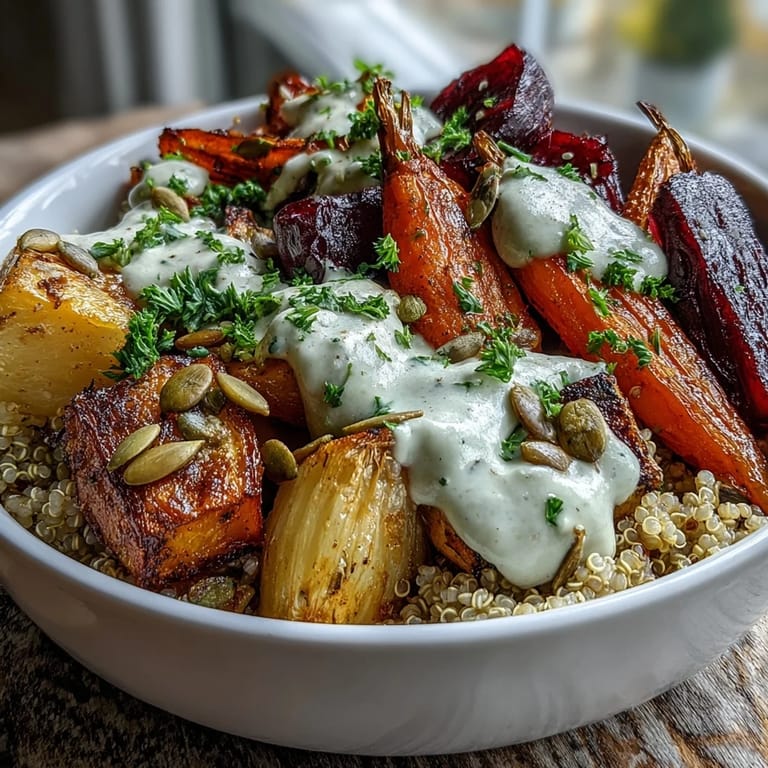
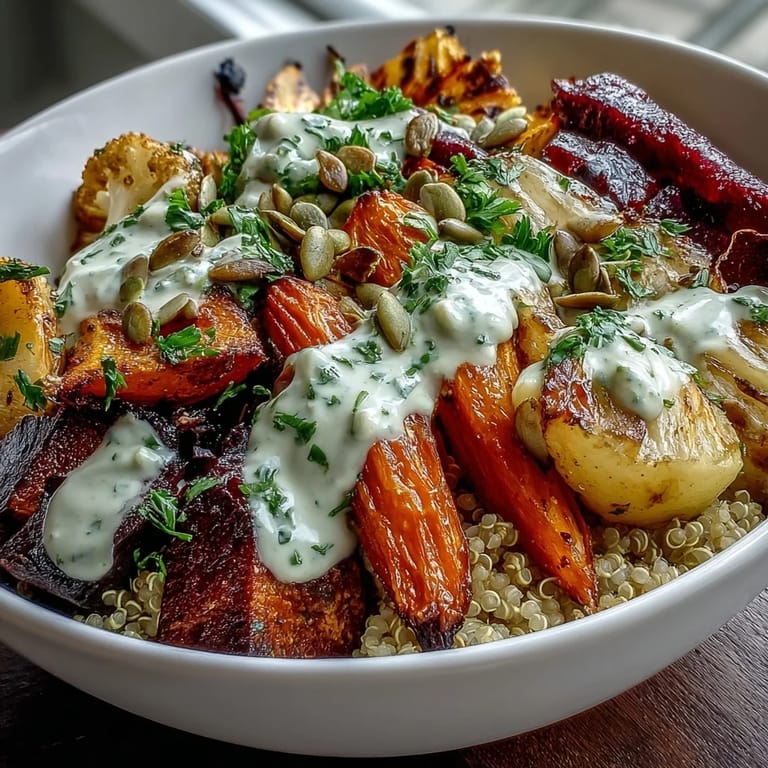
- Divide the fluffy quinoa among four bowls, top with your caramelized vegetables, drizzle generously with tahini sauce, and finish with fresh parsley and seeds if you're using them. The warmth of the vegetables will slightly soften the tahini, creating this silky coating.
 Save
Save There was a moment last spring when my partner tasted this and asked if I'd learned some secret technique, and I laughed because it's really just about letting good ingredients do their work without overthinking it. These days when I make it, I feel like I'm in on something simple and true that somehow got lost in all the noise about cooking being complicated.
Why Root Vegetables Are Having a Moment
Root vegetables spent decades hiding under the reputation of being boring side dishes, but when you actually roast them properly, they become something else entirely—sweet, complex, almost tender in a way raw vegetables never are. Beets especially transform completely; that earthiness everyone either loves or dreads becomes almost molasses-like when caramelized. There's also something grounding about building a meal around vegetables that grow beneath the soil, something that feels both nourishing and honest.
The Tahini Sauce: Why It Changes Everything
Tahini gets a bad reputation for being heavy, but that's usually because people use it wrong—typically drowning things in it without balancing it. When you cut it with lemon juice and thin it with water, it becomes this silky, almost luxurious coating that somehow makes root vegetables feel elegant. A lot of people think they need cream for richness, but this sauce proves you don't—sesame paste and lemon juice do all the work, and they do it better.
Building Flavor and Texture Into Every Bite
What makes this bowl feel complete rather than virtuous is the contrast happening in every spoonful—soft caramelized vegetables meeting fluffy quinoa, everything tied together with creamy sauce and finished with a little crunch from seeds. It's not an accident that these elements work together; it's intentional choices stacked on top of each other. The parsley adds a green note at the very end that keeps everything from feeling heavy, which is the difference between a bowl you want to eat and one you feel like you should eat.
- Toast your seeds yourself if you have time—five minutes in a dry pan transforms them from okay to incredible.
- Make extra tahini sauce because you'll want it on other things—roasted broccoli, grain bowls, even drizzled on scrambled eggs.
- This bowl tastes even better the next day when flavors have melded, so it's your friend for meal prep without being boring.
 Save
Save This bowl has become one of those recipes I make when I want to feel taken care of, which is honestly the best reason to cook anything. It's straightforward enough that you won't stress, but thoughtful enough that you'll actually feel nourished when you're done.
Recipe FAQs
- → Which root vegetables work best?
Carrots, beets, turnips, and parsnips are excellent choices. Sweet potatoes, rutabaga, or celery root also roast beautifully. Choose vegetables that are similar in size for even cooking.
- → How do I achieve proper caramelization?
Roast at 425°F (220°C) in a single layer without overcrowding the pan. This allows moisture to escape and natural sugars to concentrate, creating that golden caramelized exterior.
- → Can I prepare components ahead?
Yes. Roast vegetables up to 3 days in advance and refrigerate. Cook quinoa ahead and store separately. Make tahini sauce and keep in the fridge—thin with water before serving.
- → What adds more protein to this bowl?
Chickpeas, lentils, or white beans can be roasted alongside the vegetables. A poached or fried egg, crumbled feta, or grilled tofu also transform this into a protein-rich meal.
- → How do I adjust the tahini consistency?
Start with the recommended water amount, then add more one tablespoon at a time. The sauce should be pourable but thick enough to coat a spoon. It will thicken as it sits.
- → What wine pairs well?
A crisp Sauvignon Blanc complements the earthy sweetness of roasted vegetables. For something non-alcoholic, try an herbal tea like mint or chamomile to balance the richness.