 Save
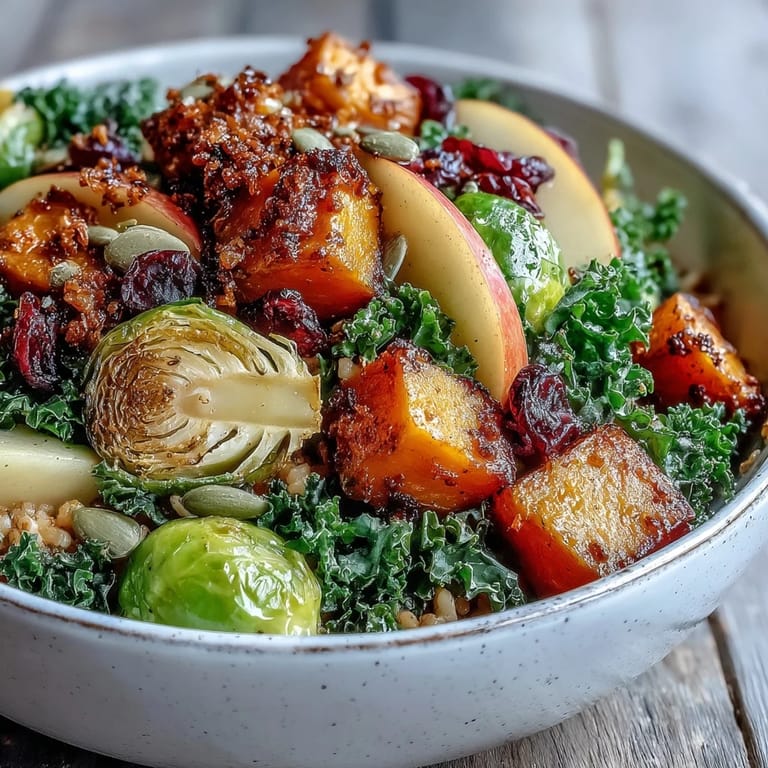
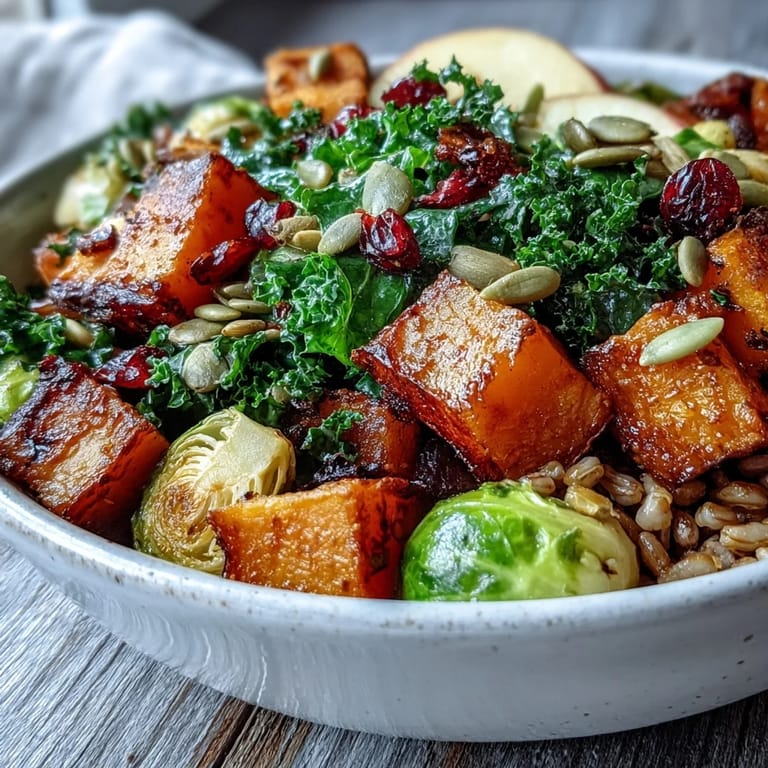
Save Last October, I was standing in my kitchen on a gray Wednesday morning, overwhelmed by the pile of farmers market bags scattered across my counter. My friend texted asking what I was making for lunch, and instead of overthinking it, I just started roasting everything golden and brown. That simple impulse turned into this Fall Vegetable Bowl, and now I make it whenever the season shifts and I need something that feels like comfort wrapped in color. It became my answer to those days when you want real food that doesn't demand much fuss.
I brought this bowl to a potluck during a crisp fall evening, and I watched people go back for seconds, then thirds, examining it like they were trying to decode some secret. My neighbor asked for the recipe right there, standing by the kitchen counter with a fork in hand, and that's when I knew this wasn't just my quick lunch hack anymore—it had become something worth sharing.
Ingredients
- Butternut squash, peeled and cubed (2 cups): The sweetness of roasted squash is what anchors this whole bowl; when it caramelizes at high heat, it becomes almost creamy without any cream, and I've learned to cube it evenly so everything finishes at the same time.
- Brussels sprouts, trimmed and halved (2 cups): These little cabbages transform when roasted until their edges crisp up and char slightly, bringing a nutty depth that balances the fruit's sweetness.
- Kale, stems removed and leaves chopped (2 cups): The heartier greens don't get lost in this bowl; a quick wilt softens them just enough while keeping their earthy character intact.
- Apple, cored and sliced (1 large): I use whatever's in season, but a crisp variety like Granny Smith or Honeycrisp gives you that contrast between soft roasted flesh and a hint of tang.
- Farro, rinsed (1 cup): This chewy grain holds up beautifully to the roasted vegetables and adds texture; if you need gluten-free, quinoa absorbs the flavors just as well.
- Vegetable broth or water (2 cups): Broth adds subtle flavor to the grains, but water works perfectly fine if that's what you have.
- Olive oil (3 tbsp total): Good oil is worth it here since it's doing the heavy work of bringing everything to golden perfection.
- Sea salt and black pepper: Standard seasoning, but don't skip the salt on the vegetables before they roast—it draws out their moisture and helps them caramelize.
- Smoked paprika (1/2 tsp): This gives the roasted vegetables a subtle smoky note that ties the whole autumn theme together without overpowering.
- Ground cinnamon (1/2 tsp): Just a whisper on the apples, enough to make people pause and wonder what that warmth is.
- Toasted pumpkin seeds (1/4 cup): The crunch here is essential; it's what keeps each spoonful interesting.
- Dried cranberries (2 tbsp): A small handful of tart sweetness scattered across the top, optional but worth finding space for.
- Feta or vegan cheese (2 tbsp, optional): Use this if you want richness, skip it if you prefer letting the vegetables shine as the stars.
Tired of Takeout? 🥡
Get 10 meals you can make faster than delivery arrives. Seriously.
One email. No spam. Unsubscribe anytime.
Instructions
- Get your oven ready and prepare the pans:
- Preheat to 425°F and line two baking sheets with parchment paper so your vegetables won't stick and cleanup becomes almost pleasant. This is the moment where everything sets up for success.
- Season and spread the winter squash and Brussels sprouts:
- Toss the cubed squash and halved Brussels sprouts in a bowl with 2 tablespoons of olive oil, salt, pepper, and smoked paprika until they're evenly coated, then spread them in a single layer on one baking sheet. Don't crowd the pan—give them room to breathe and turn golden brown.
- Prepare the apples separately:
- Arrange your apple slices on the second baking sheet, drizzle with the remaining tablespoon of oil, and dust with cinnamon. They'll roast faster than the vegetables, so keeping them separate means nothing gets overcooked.
- Roast everything until golden:
- Put both sheets in the oven and set a timer for 25 to 30 minutes for the squash and Brussels sprouts, stirring them halfway through. The apples only need about 15 minutes, so you can add them later or watch them carefully so they soften without falling apart.
- Cook your grain while vegetables roast:
- Rinse your farro, then bring vegetable broth to a boil in a saucepan, add the grain, reduce heat to low, cover, and let it simmer for 20 to 25 minutes until tender. If there's excess liquid when it's done, just drain it.
- Wilt the kale quickly:
- In a skillet over medium heat, add your chopped kale with just a splash of water, stirring for 2 to 3 minutes until it softens and deepens in color. This last-minute step keeps it vibrant and fresh.
- Bring it all together in bowls:
- Divide the cooked farro among four bowls, then top each one with roasted squash, Brussels sprouts, sautéed kale, and roasted apples in whatever arrangement feels right. Everything should still be warm, which is when the flavors really marry together.
- Finish with toppings and serve:
- Scatter pumpkin seeds and cranberries over the top, add feta or vegan cheese if you're using it, and serve immediately while everything's still warm. This is the moment when the bowl goes from nourishing to genuinely exciting.
 Save
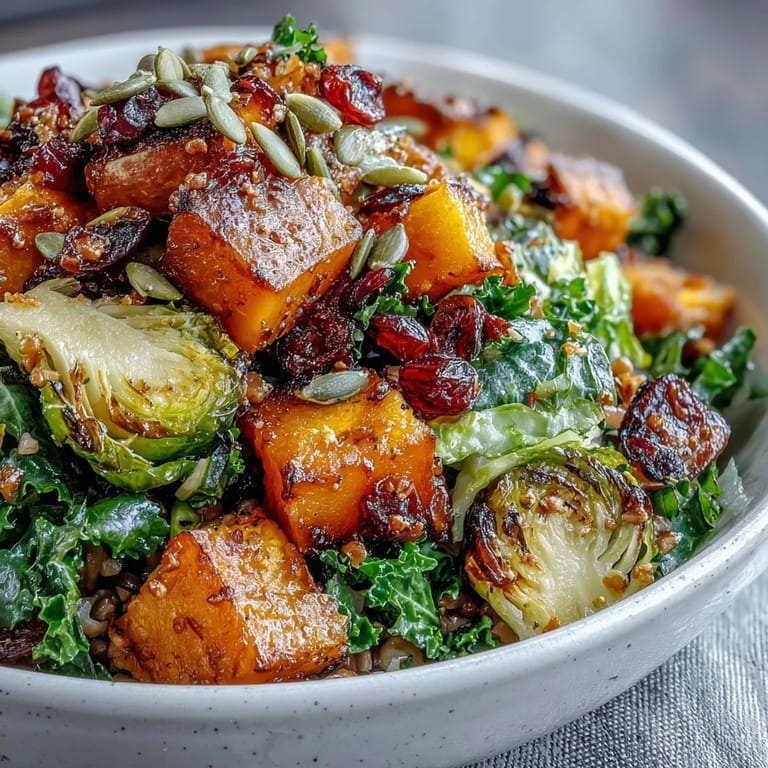
Save On a Sunday in late October, I made this bowl for my partner who'd been under the weather, and watching them eat a full serving with genuine appetite made me feel like I'd actually done something important. That's the moment I realized this recipe was about more than just using up produce—it was about caring for someone through food.
Why Fall Vegetables Work This Way
There's something about roasting vegetables when the temperature drops that just makes sense. Squash and Brussels sprouts have a natural sweetness that deepens in the oven, creating this caramelized exterior that's almost candy-like, but the vegetables stay savory underneath. Apples add brightness without feeling out of place because they belong to autumn too, and when you roast them instead of eating them raw, they become less about crunch and more about warm, soft comfort. The cinnamon isn't just nostalgia—it's a bridge between sweet and savory that keeps your palate engaged with each spoonful.
Building Layers of Texture
One thing I've learned from making this bowl repeatedly is that texture matters as much as flavor. The chewy farro gives you something to bite into, the crispy edges of roasted vegetables snap between your teeth, the wilted kale provides a tender contrast, and the pumpkin seeds bring that crucial crunch that makes you want another bite. Without that variety, even the most delicious flavors start to feel monotonous by the third or fourth spoonful. That's why I never skip the seeds, and why I'm specific about roasting the vegetables until they're truly caramelized, not just cooked through.
Making It Your Own
This recipe is forgiving enough to let you follow your instincts. If you see beautiful pears at the market instead of apples, use them and trust that they'll be delicious. If you're cooking for someone who avoids grains, roasted chickpeas or crumbled tofu give you the same satisfying protein and heartiness. Even swapping brown rice or quinoa for farro changes the texture slightly but keeps the soul of the bowl intact, and sometimes those small variations remind you why you love cooking in the first place.
- Roast your vegetables at 425°F to get maximum caramelization without burning anything.
- Taste your grains while they're cooking so you catch them at that perfect tender moment instead of guessing.
- Assemble the bowls while everything is still warm because that's when flavors meld and the whole meal feels more like one experience than four separate components.
 Save
Save This bowl has become my autumn anchor, the thing I make when I want to feel grounded and nourished without fussing. Every time I assemble it, I'm reminded that the best meals are the ones that taste both simple and special at the same time.
Recipe FAQs
- → Can I make this bowl gluten-free?
Yes, simply substitute the farro with quinoa or brown rice. Both options work beautifully with the roasted vegetables and maintain the hearty texture of the dish.
- → How long do leftovers keep?
Store components separately in airtight containers for up to 4 days. The roasted vegetables reheat well at 350°F for 10-15 minutes, or enjoy them cold for a quick lunch.
- → What protein options work well?
Add roasted chickpeas, baked tofu, or grilled chicken. These proteins complement the autumn flavors and can be seasoned with the same smoked paprika and cinnamon blend.
- → Can I use different winter squash?
Absolutely. Acorn squash, delicata, or sweet potato work equally well. Adjust roasting time slightly based on the vegetable's density.
- → What other grains can I use?
Beyond farro, try quinoa for a lighter option, brown rice for nuttiness, or wheat berries for extra chew. Each brings its own character to the bowl.
- → Is this suitable for meal prep?
Perfect for meal prep. Roast vegetables and cook grains in batches, then assemble bowls throughout the week. Keep toppings like pumpkin seeds separate for crunch.