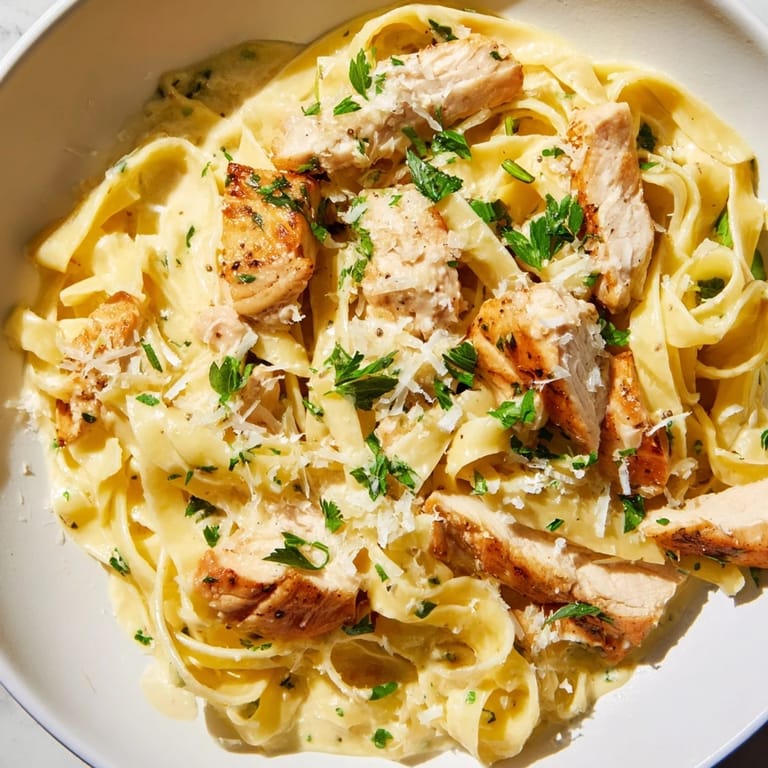
 Save
Save There's something about fettuccine Alfredo that stops conversation at the dinner table. My mom made it once when I was home from college, and I remember the kitchen filling with that buttery, cream-laden aroma while she whisked the sauce with this almost meditative focus. She kept muttering about not letting it break, and there was this quiet intensity to the whole thing, like she was conducting something delicate. When I finally tasted it, I understood why people get so reverent about such a simple dish. It's just pasta, butter, cream, and cheese, but somehow it becomes something you can't stop thinking about for days.
I made this for a dinner party once where everything that could go wrong did—the wine spilled, the guest list changed twice, and I'd convinced myself I'd ruin the main course. But when I handed around those bowls and watched people's faces soften with that first bite, all of it melted away. My friend Sarah went quiet, which never happens, and just said, "You have to give me this recipe." That's when I realized Alfredo isn't just food; it's a small moment of magic you can give people.
Ingredients
- Fettuccine pasta (400 g): Use fresh if you can find it, but dried works beautifully too—the key is cooking it just shy of tender so it holds the sauce instead of soaking it up like a sponge.
- Unsalted butter (60 g): This is your flavor foundation, so don't skimp on quality; salted butter will throw off the balance once the Parmesan joins the party.
- Heavy cream (250 ml): The real MVP—it carries the cheese and butter together and keeps everything silky instead of gluey.
- Freshly grated Parmesan (120 g): Pre-grated cheese has anti-caking agents that refuse to melt smoothly, so grate it yourself just before you need it, even if it feels like extra work.
- Garlic clove (1, minced): Optional but honestly? A whisper of garlic changes everything without announcing itself.
- Salt and freshly ground black pepper: Taste as you go because the cheese is salty, and you want balance, not a salt bomb.
- Nutmeg (pinch): This tiny touch sounds weird until you taste it, then you wonder why anyone makes this without it.
- Chicken breasts (2, optional): A light sear in olive oil gives you protein without overpowering the delicate sauce.
- Fresh parsley and extra Parmesan for garnish: These aren't decorative—they're the final note that makes people lean in for another bite.
Tired of Takeout? 🥡
Get 10 meals you can make faster than delivery arrives. Seriously.
One email. No spam. Unsubscribe anytime.
Instructions
- Set Up Your Pasta Water:
- Bring a large pot of salted water to a rolling boil and cook the fettuccine until it's just barely al dente, about a minute under what the package says. The pasta will continue cooking slightly when it hits the warm sauce, so catching it just before full tenderness matters more than you'd think.
- Sear the Chicken (If You're Using It):
- Pat the chicken breasts dry, season them generously with salt and pepper, then sear them in a hot skillet with olive oil for 6 to 7 minutes per side until they're golden and the juices run clear. Let them rest for 5 minutes before slicing so they stay tender instead of stringy.
- Build Your Sauce Base:
- Over medium-low heat, melt the butter and add the minced garlic if using, letting it sizzle for just 30 seconds until you catch its fragrance—any longer and it turns bitter. Pour in the heavy cream and let it come to a gentle simmer, stirring constantly for 2 to 3 minutes so it heats evenly.
- Fold In the Cheese:
- Lower the heat to the gentlest setting and whisk the Parmesan in slowly, a handful at a time, letting each addition melt completely before adding more. This slow, patient step is what keeps your sauce smooth and luxurious instead of grainy and broken.
- Season with Intention:
- Taste the sauce now and adjust the salt, pepper, and add that tiny pinch of nutmeg, whisking it in so it becomes a shadow note rather than something obvious. Remember the pasta water you reserved—you'll use it to adjust the consistency.
- Marry Pasta and Sauce:
- Add the drained pasta to the sauce and toss gently with tongs, watching as the noodles absorb that creamy coating. If it looks thick, splash in a little pasta water, a quarter cup at a time, until the sauce coats the pasta like silk rather than clinging like glue.
- Plate and Finish:
- Divide the pasta among bowls, top with sliced chicken if you seared some, shower it with fresh parsley and extra Parmesan, and serve immediately so the sauce stays warm and glossy. Speed matters here—this is one dish that suffers if it sits.
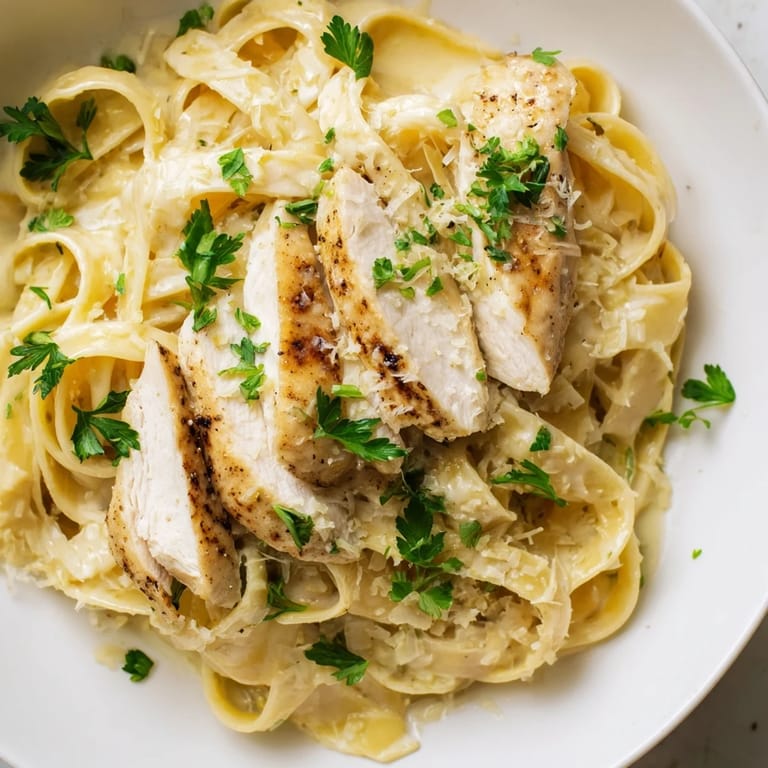 Save
Save There was a moment in my kitchen, standing over a pot of this creamy sauce on a quiet evening, when I realized that the best meals aren't about impressing anyone—they're about the comfort of knowing someone cared enough to make something simple taste extraordinary. Fettuccine Alfredo became my love language that year.
The Secret to Silky Sauce
The difference between a sauce that coats your fork like velvet and one that turns grainy lives in temperature and patience. I learned this the hard way after ruining several batches by getting impatient and cranking up the heat or dumping the cheese in all at once like I was in a race. Now I treat the cheese addition like I'm teaching someone to swim—slow, steady, giving everything time to integrate before moving forward. The cream should never boil; it should barely tremble on the surface.
Variations Worth Trying
Once you master the base sauce, it becomes a canvas. I've added sautéed mushrooms when I wanted earthiness, tossed in fresh peas for brightness, stirred in crispy bacon when I needed to impress someone quickly, and even added a touch of white wine for acidity that lifts the whole dish. The beauty is that the sauce is so neutral and rich that almost anything you add feels intentional rather than haphazard, which gives you permission to cook by mood rather than by rigid rules.
Pairing and Serving
This is the kind of dish that deserves a crisp white wine alongside—something like Pinot Grigio cuts through the richness and makes you want another bite. I serve it with a simple green salad dressed in lemon vinaigrette and crusty bread, all part of the same philosophy: let the Alfredo be the star, but give it supporting players that keep the meal balanced and interesting.
- A squeeze of fresh lemon right at the table wakes up all the flavors without overpowering them.
- Make sure everything is hot before you plate, because this sauce loses its magic as it cools.
- If you have guests, plate it at the last possible second so they get the full experience of steam and fragrance the way it's meant to be.
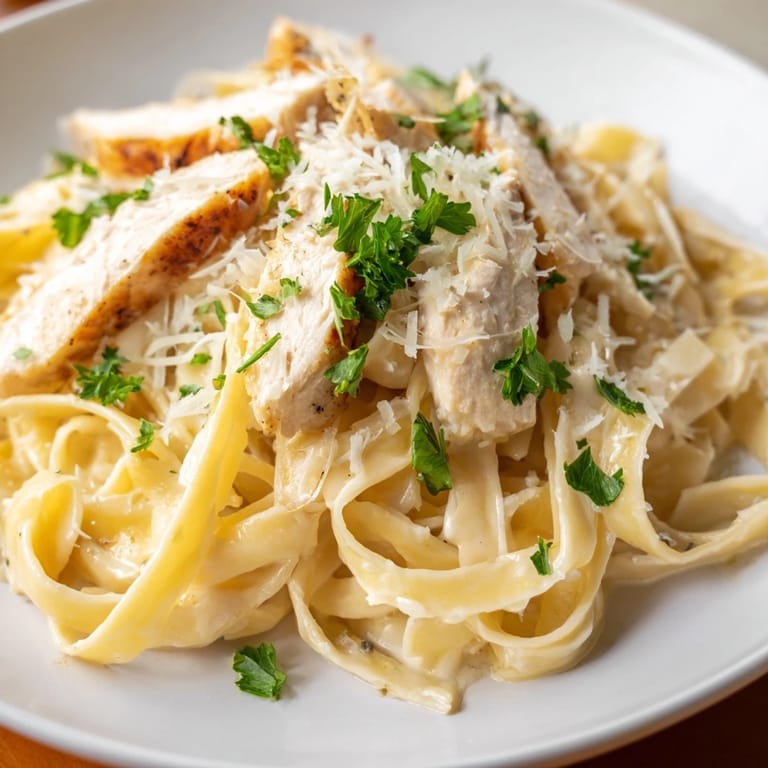 Save
Save This recipe is proof that you don't need complexity to create something memorable; you need intention and a few good ingredients treated with respect. Make this when you want to remind someone (or yourself) that you're worth the effort.
Recipe FAQs
- → How do I achieve a smooth creamy sauce?
Gently melt butter and gradually whisk in heavy cream and Parmesan cheese over low heat to avoid curdling and ensure a silky texture.
- → Can I add garlic to the sauce?
Yes, finely minced garlic can be sautéed briefly in butter before adding cream to infuse subtle aromatic notes.
- → What pasta water tips can improve the sauce consistency?
Reserve some pasta water and add a little at a time to the sauce while tossing the pasta, helping to loosen and blend the sauce perfectly.
- → How do I prepare the chicken for added heartiness?
Season skinless chicken breasts with salt and pepper, sauté in olive oil until golden and cooked through, then slice thinly before serving.
- → Are there seasoning options to enhance the flavor?
Sprinkle freshly ground black pepper, salt, and a pinch of nutmeg into the sauce to deepen flavor complexity without overpowering the creaminess.