 Save
Save There's something about the sound of chicken hitting hot oil that brings back lazy Saturday afternoons at my aunt's kitchen, where she'd fry up batch after batch of these golden tenders while my cousins and I argued over who got the crispiest pieces. She never measured anything precisely, just worked with her hands and instinct, but I've learned since then that buttermilk is the secret weapon—it keeps the chicken impossibly tender inside while the panko exterior shatters between your teeth. Now when I make them, I'm chasing that exact texture, that balance of juicy and crunchy that turns a simple weeknight dinner into something people actually get excited about.
I tested this recipe last month when my partner's coworkers were coming over on short notice, and I was nervous about pulling off something impressive in thirty minutes. The buttermilk soak happened during our panicked tidying, and by the time everyone arrived, the whole apartment smelled like fried chicken and garlic—which did more for the vibe than any playlist could have. Watching people reach for thirds and ask for the recipe felt like the highest compliment I could get.
Ingredients
- Chicken breast fillets (500 g / 1.1 lb), cut into strips: Use chicken that's roughly the same thickness so everything cooks evenly; if pieces are too chunky, carefully butterfly them thinner to avoid dry outsides and raw insides.
- Buttermilk (120 ml / ½ cup): This is non-negotiable for tenderness—the acid gently breaks down the protein fibers, and regular milk with vinegar doesn't quite deliver the same silky result.
- Salt and black pepper (for marinade): 1 teaspoon salt, ½ teaspoon pepper: These simple seasonings actually penetrate the chicken when it's sitting in buttermilk, so don't skip the marinating step thinking salt on the outside is enough.
- Garlic powder and paprika (½ teaspoon each): The garlic adds depth without raw bite, while paprika brings color and a whisper of smoke that hints at the frying to come.
- All-purpose flour (120 g / 1 cup): Any standard flour works, but mixing it with the salt, pepper, and smoked paprika creates the first layer of flavor barrier before the egg wash.
- Smoked paprika (½ teaspoon for breading): Different from the regular paprika in the marinade, this adds a subtle campfire note that transforms the crust from basic to memorable.
- Eggs (2 large): The binder that holds everything together; beat them thoroughly so the coating adheres evenly without thin dry spots.
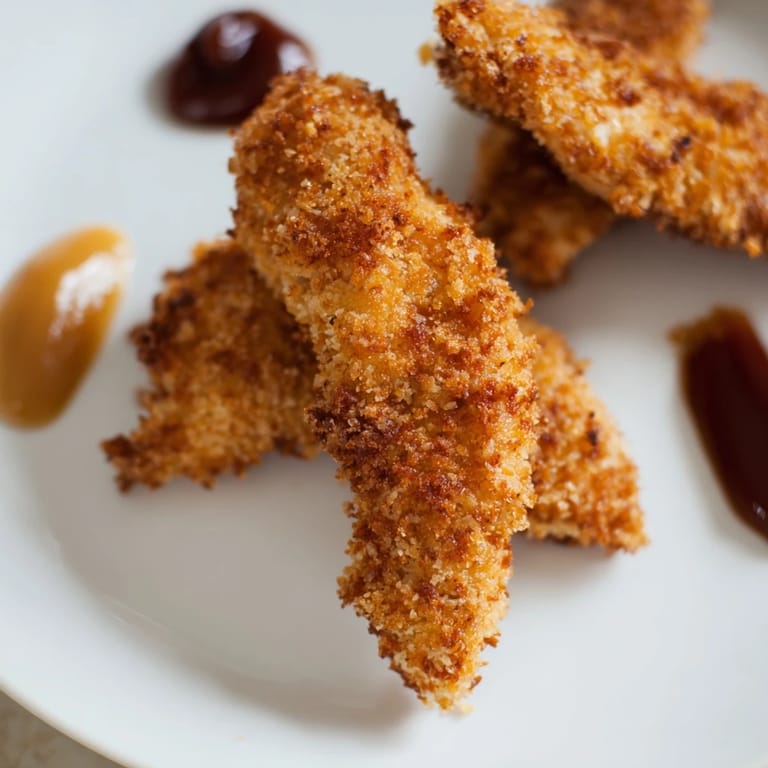
- Panko breadcrumbs (60 g / 1 cup): Regular breadcrumbs compress and fry dense, but panko stays light and airy, creating that sought-after shattering texture.
- Vegetable oil (for deep frying): Use something with a high smoke point; I prefer vegetable or canola, never olive oil which burns and tastes bitter.
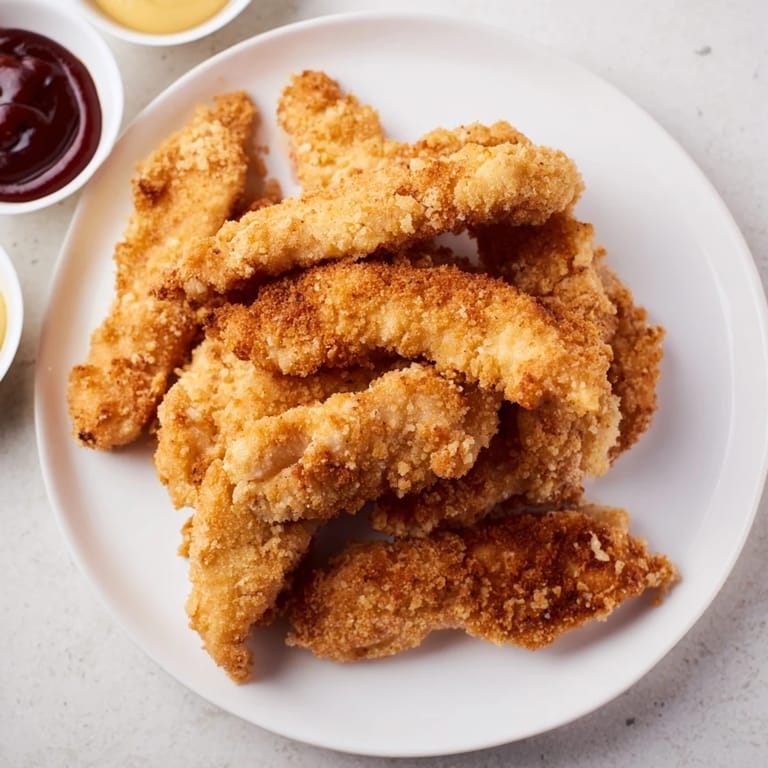
- Barbecue and honey-mustard sauces: These aren't just serving suggestions—they're the finishing touch that elevates tenders from casual to craveable.
Tired of Takeout? 🥡
Get 10 meals you can make faster than delivery arrives. Seriously.
One email. No spam. Unsubscribe anytime.
Instructions
- Create the buttermilk bath:
- Whisk buttermilk with salt, pepper, garlic powder, and paprika in a bowl, then submerge your chicken strips completely. You can marinate for thirty minutes if you're in a hurry, but two hours in the fridge will reward you with chicken so tender it practically melts on your tongue.
- Set up your breading stations:
- Arrange three shallow bowls in a line: flour mixed with salt, pepper, and smoked paprika in the first; beaten eggs in the second; panko breadcrumbs in the third. Having everything ready before you start dredging keeps the process smooth and prevents the chicken from sitting around getting soggy.
- Bread each strip with intention:
- Remove chicken from buttermilk, let excess liquid drip off (don't wring it), then drag each strip through flour until fully coated. Dip into egg, letting some drip back into the bowl, then roll in panko, pressing gently so the crumbs actually stick and create texture rather than just sliding off.
- Heat your oil to the exact temperature:
- Use a thermometer—175°C (350°F) is the sweet spot where the outside crisps golden while the inside finishes cooking through without burning. Too cool and you get greasy, soggy tenders; too hot and they brown before cooking through.
- Fry in batches without crowding:
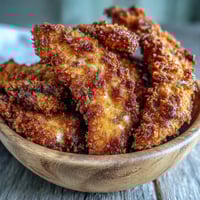
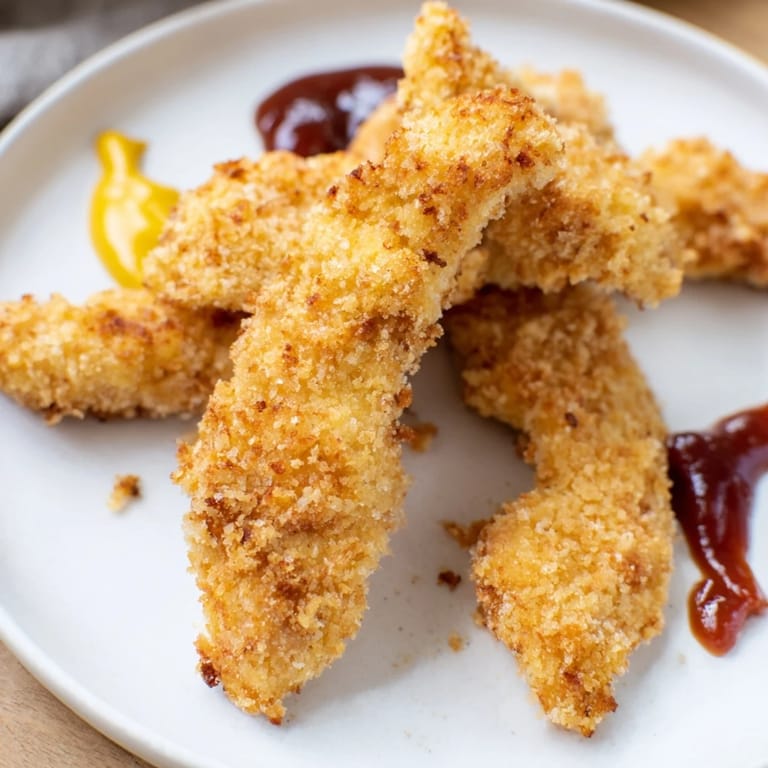
- Three to four minutes per side is your target, watching for that deep golden-brown color that signals a properly sealed crust. Don't stack them in the pan—they need space to crisp all over, and overcrowding drops the oil temperature.
- Drain and serve immediately:
- Use a wire rack instead of paper towels if you have one, since it allows air to circulate underneath and keeps the bottom from steaming and losing its crunch. They're best eaten within minutes of coming out of the oil.
 Save
Save Years ago, I made these for my dad during a rough week when he'd just started a new job and seemed stressed about everything. Watching his face light up when he bit into one—hearing him actually laugh and say it tasted like the diners he loved as a kid—reminded me that some of the best things we make in the kitchen aren't about technique or ingredients at all, they're about saying I'm thinking of you without using words.
Why the Buttermilk Method Changes Everything
I spent years frying chicken in regular milk mixed with vinegar, thinking I was being economical, until a friend's grandmother showed me the difference buttermilk makes. The acid content is different—it's not just sour, it actually softens the muscle fibers from the inside out, which is why commercial places use it religiously. Now I always have buttermilk on hand, and honestly, it's become one of those ingredients I buy even when I'm not planning a specific meal, because once you taste the difference, you can't unknow it.
The Breading Technique That Stops Fallout
The three-bowl method isn't just chef posturing—it's actually the simplest way to guarantee full, even coverage without clumps of breading falling off mid-fry. I used to try to bread everything in one dish like I was making meatloaf, and the result was inconsistent and frustrating. Setting up the stations takes an extra two minutes but saves you from fishing burnt breadcrumb bits out of your oil and ending up with half-naked, half-over-breaded pieces.
Panko Is Worth the Small Difference in Price
If you've only ever used regular breadcrumbs, panko feels almost indulgent when you first bite into it—that light, airy crispness comes from the way the flakes are cut, larger and less densely packed than standard breadcrumbs. Regular breadcrumbs compress during frying and end up almost greasy-tasting by contrast, while panko stays structural and shatters under your teeth. I keep a box in my pantry now alongside the all-purpose flour, and I won't go back.
- The color difference is visible too—panko browns to a deeper, more appetizing golden shade that makes plated chicken look restaurant-quality.
- If you're ever stuck without panko, tear up some crusty bread, let it dry slightly, then pulse it in a food processor for the closest approximation.
- Spray your breaded strips lightly with cooking oil before baking if you're doing the oven option instead of frying—it helps the panko crisp without needing the oil bath.
 Save
Save These tenders have somehow become the thing I make when people show up unexpectedly or when I need to feel capable in the kitchen. They're simple enough that there's no pretense, but made with enough care that they taste like someone actually wanted to feed you well.
Recipe FAQs
- → How long should chicken strips be marinated?
Marinate chicken strips for at least 30 minutes to enhance tenderness and flavor. For deeper taste, refrigerate up to 2 hours.
- → What is the best oil temperature for frying?
Heat vegetable oil to 175°C (350°F) to ensure the strips cook evenly and achieve a crispy golden crust.
- → Can these chicken strips be baked instead of fried?
Yes, baking is a great alternative. Place breaded strips on a baking sheet, lightly spray with oil, and bake at 220°C (425°F) for 18-20 minutes, flipping halfway.
- → What sauces complement these chicken strips?
Barbecue sauce and honey-mustard sauce are classic accompaniments, providing a balance of smoky and sweet flavors.
- → How can I add extra flavor to the breading?
Incorporate cayenne pepper or dried herbs into the marinade or breading mixture for an added kick and depth of flavor.
- → What side dishes pair well with these chicken strips?
Fries, fresh salads, and coleslaw make excellent sides, creating a balanced and satisfying meal.